
Contrasting the 2024 Energy Policies of Trump and Harris
Both Democrats and Republicans emphasize their goal for the United States to be energy independent. However, they aim to achieve this through different means, reflecting their broader political ideologies.

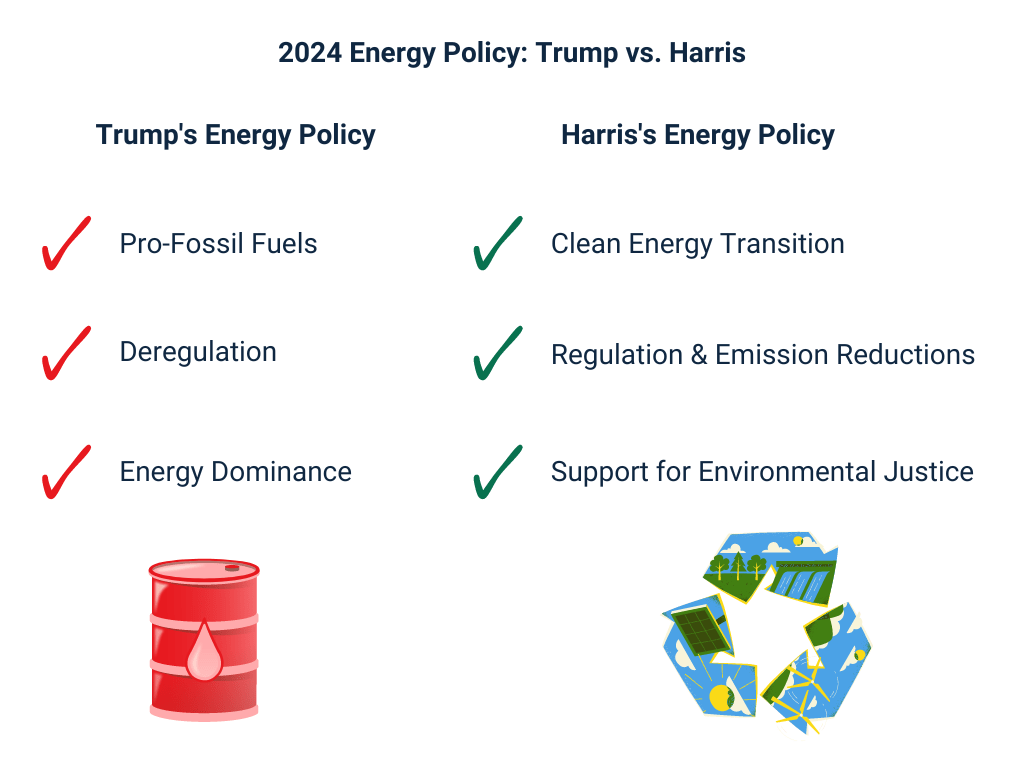
Trump’s Energy Policy: Donald Trump’s energy agenda is heavily focused on promoting fossil fuels, particularly by increasing domestic production of oil and gas. His approach involves significant deregulation and withdrawal from international climate agreements like the Paris Accord, arguing that these measures harm the U.S. economy without delivering significant environmental benefits. Trump’s rhetoric frequently revolves around achieving “energy dominance” and lowering energy costs by expanding fossil fuel production and infrastructure, such as pipelines
Harris’s Energy Policy: Kamala Harris, in contrast, supports a continuation of the Biden administration’s focus on clean energy and climate action. This includes reducing U.S. carbon emissions by incentivizing clean energy technologies and electric vehicles. Harris has a history of advocating for strong environmental regulations and is likely to push for further reductions in emissions and increased support for environmental justice initiatives. Although Harris has faced criticism for not outlining a highly detailed new energy plan since becoming the Democratic nominee, her administration is expected to prioritize climate change mitigation as a central component of its policy agenda.
In Summary: While Trump seeks to revive and expand traditional fossil fuel industries through deregulation, Harris aims to advance clean energy and climate resilience, continuing the policies initiated during her vice presidency. The choice between these two approaches represents a significant divergence in how the U.S. might tackle energy and environmental issues in the coming years.
You May Also Like


Something went wrong. Please refresh the page and/or try again.